
Bali Food and Drink: What to Eat, Where to Find It & How to Order Like a Local
Balinese cuisine is one of the island’s best‑kept secrets. While Bali is famous for its beaches, temples and wellness scene, the food and drink here deserves just as much attention — from smoky street‑side satay and fragrant curries to traditional sweets and herbal wellness drinks.
Whether you’re eating at a local warung, a beachfront restaurant or a high‑end dining room, Bali offers something for every palate and budget. This guide covers the essential Balinese dishes you need to try, plus practical tips on where to eat, how to order, and what to avoid.
Ready to eat your way through Bali? Let’s go.
Quick heads‑up on “plus plus” (++) pricing: In Bali, some cafés, restaurants and almost all hotel restaurants list menu prices as “++” (often written as “subject to 21%”).
Key Balinese Food Terms
Before you dive in, here are the most useful food words you'll see on menus across Bali:
- Warung – local restaurant
- Goreng – fried
- Campur – mixed
- Pedas – spicy
- Manis – sweet
- Nasi – rice
- Mie – noodles
- Sambal – chilli sauce
- Sayur – vegetables
- Ayam – chicken
- Babi – pork
- Bebek – duck
- Ikan – fish
- Sapi – beef
- Kacang – nuts
- Bintang – Bintang
15 Must‑Try Balinese Dishes
1. Nasi Goreng & Mie Goreng
Nasi goreng (fried rice) and mie goreng (fried noodles) are the most famous Indonesian dishes — and for good reason. Simple, filling and available everywhere, they’re eaten at any time of day.
What makes them special:
Both dishes use kecap manis (sweet soy sauce) and shrimp paste, giving them a distinctive sweet‑and‑salty flavour you won’t find in other Asian fried rice or noodle dishes.
Nasi goreng typically comes with chicken or prawns, vegetables, a fried egg on top, and crackers on the side. Mie goreng follows a similar formula but uses stir‑fried noodles instead of rice.
Where to try it: Literally anywhere — from street carts to luxury resorts.
2. Nasi Campur
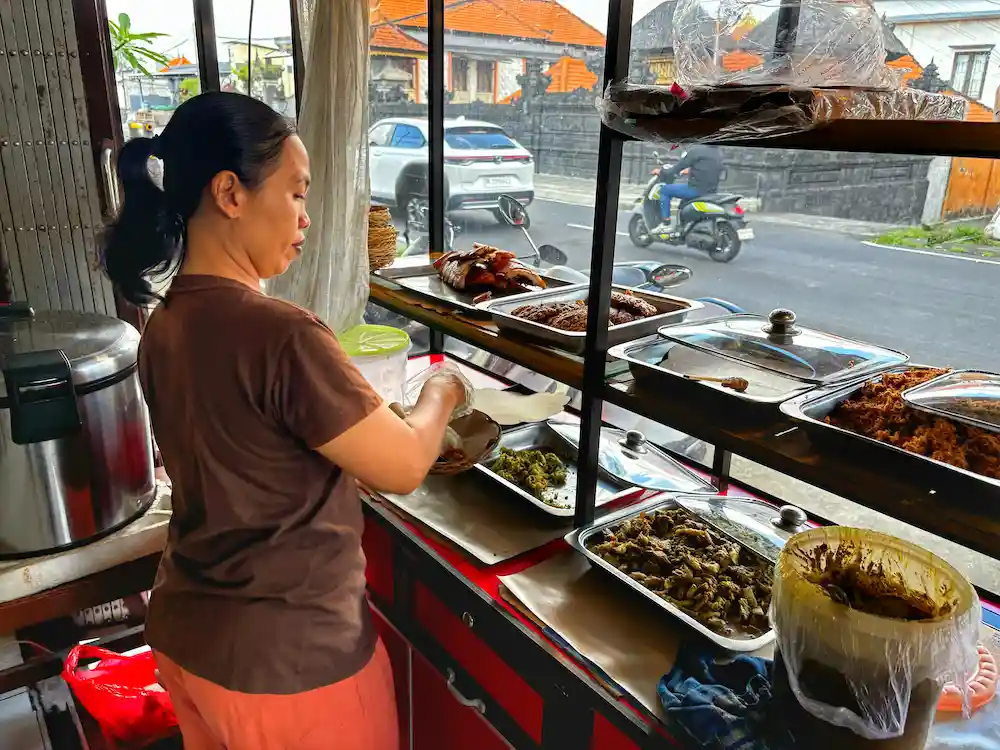
Nasi campur means “mixed rice,” and that’s exactly what you get — a plate of steamed rice surrounded by small portions of different dishes like meats, vegetables, tofu, tempeh, and sambal.
In some restaurants it’s pre‑plated. In local warungs, it’s often served buffet‑style, so you can point at what you want and build your own plate.
Why it’s great: Perfect for trying multiple dishes in one meal, and ideal for fussy eaters or anyone who wants variety.
Where to try it: Local warungs across Bali, especially in Ubud, Sanur and Denpasar.
3. Babi Guling
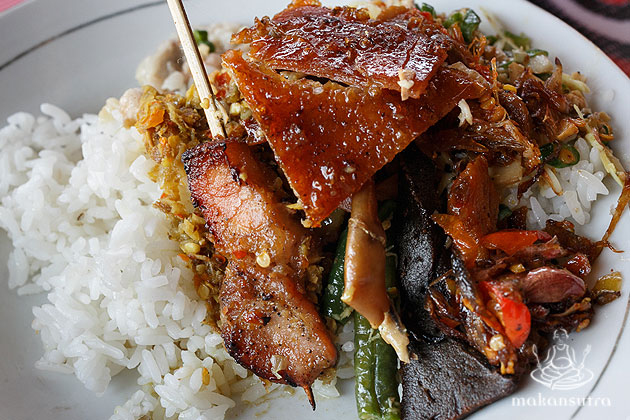
Babi guling is Bali’s most famous dish — a whole suckling pig stuffed with spices, slow‑roasted over fire until the skin is crispy and the meat is tender and juicy.
Traditionally reserved for ceremonies and special occasions, babi guling has become a must‑try for visitors. It’s usually served with rice, vegetables, crispy pork skin, and lawar (a spicy mix of vegetables, coconut and minced meat).
Where to try it: Ibu Oka in Ubud is the most famous spot, but you’ll find excellent babi guling warungs across the island.
4. Sate Lilit
Sate lilit is Bali’s unique take on satay. Instead of skewering chunks of meat, finely minced fish, chicken or pork is mixed with grated coconut, coconut milk and spices, then wrapped around bamboo sticks or lemongrass stems and grilled.
The result is smoky, aromatic and delicious.
How to eat it: Traditionally served with sambal or sweet soy sauce — not peanut sauce like regular satay.
Where to try it: Warungs and night markets across Bali.
5. Soto Bakso
Soto bakso is a comforting Indonesian meatball soup with Chinese roots. It features fluffy chicken or beef meatballs in a light broth, served with rice noodles, tofu, greens, and sometimes wontons.
It’s one of Bali’s most popular street foods, often sold from carts towed by motorbike.
Tip for first‑timers: If you’re worried about Bali belly, start with a sit‑down warung rather than a street cart.
Where to try it: Bakso IGA in Canggu is a good beginner‑friendly option.
6. Balinese Chicken Curry (Kare Ayam Bali)
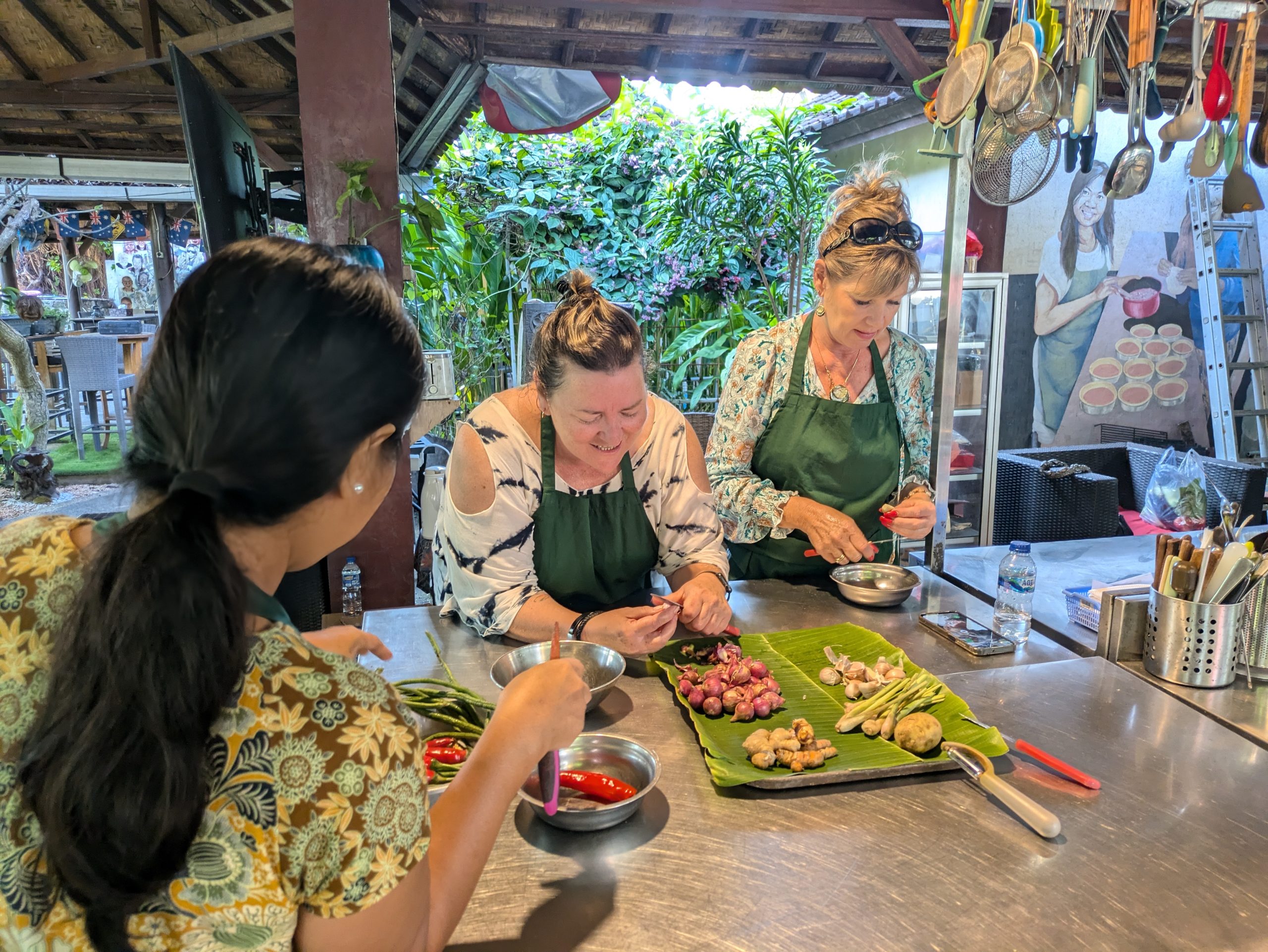
This fragrant yellow curry is made with coconut milk, turmeric, lemongrass, galangal, ginger, garlic and chilli. It’s creamy, aromatic and absolutely delicious.
Chicken is the most common protein, but you’ll also find versions with fish, tofu or tempeh.
Allergy note: Many Balinese curry pastes include cashews or peanuts for extra richness.
Where to try it: Local warungs and cooking classes across Bali.
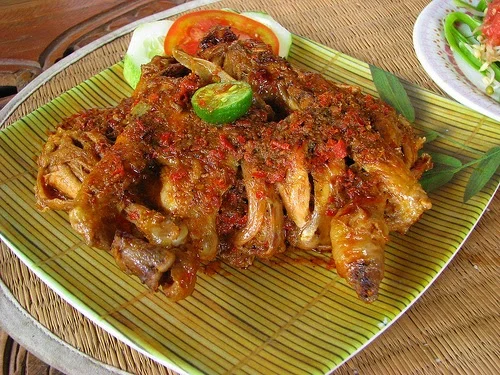
7. Ayam Betutu
Ayam betutu is a traditional Balinese dish from the northwest of the island. Chicken (or duck) is marinated in a rich spice paste, wrapped in banana leaves, and slow‑cooked until tender.
It’s aromatic, deeply flavourful, and often served with rice, water spinach, fried peanuts and sambal.
Where to try it: Northwest Bali (Pemuteran, Gilimanuk) or specialist restaurants in the south.
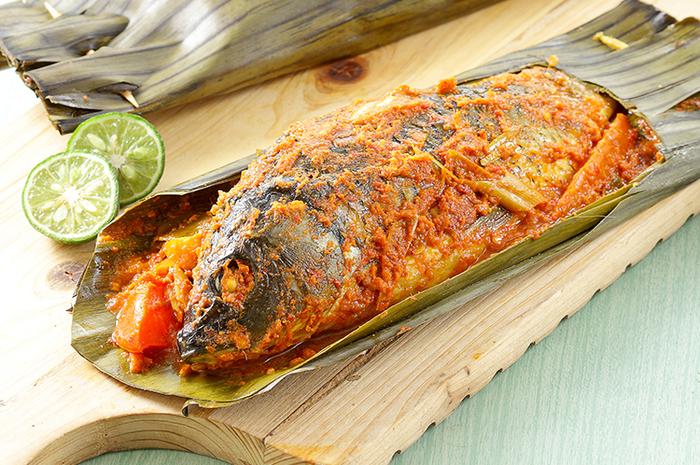
8. Pepes Ikan
Pepes ikan is fresh fish marinated in spices, wrapped in banana leaves and steamed or grilled. The banana leaves keep the fish moist and add a subtle fragrance.
It’s often served as a sharing dish.
Where to try it: Jimbaran is famous for fresh seafood — visit the fish market, choose your fish, and have it grilled on the spot at a nearby warung.
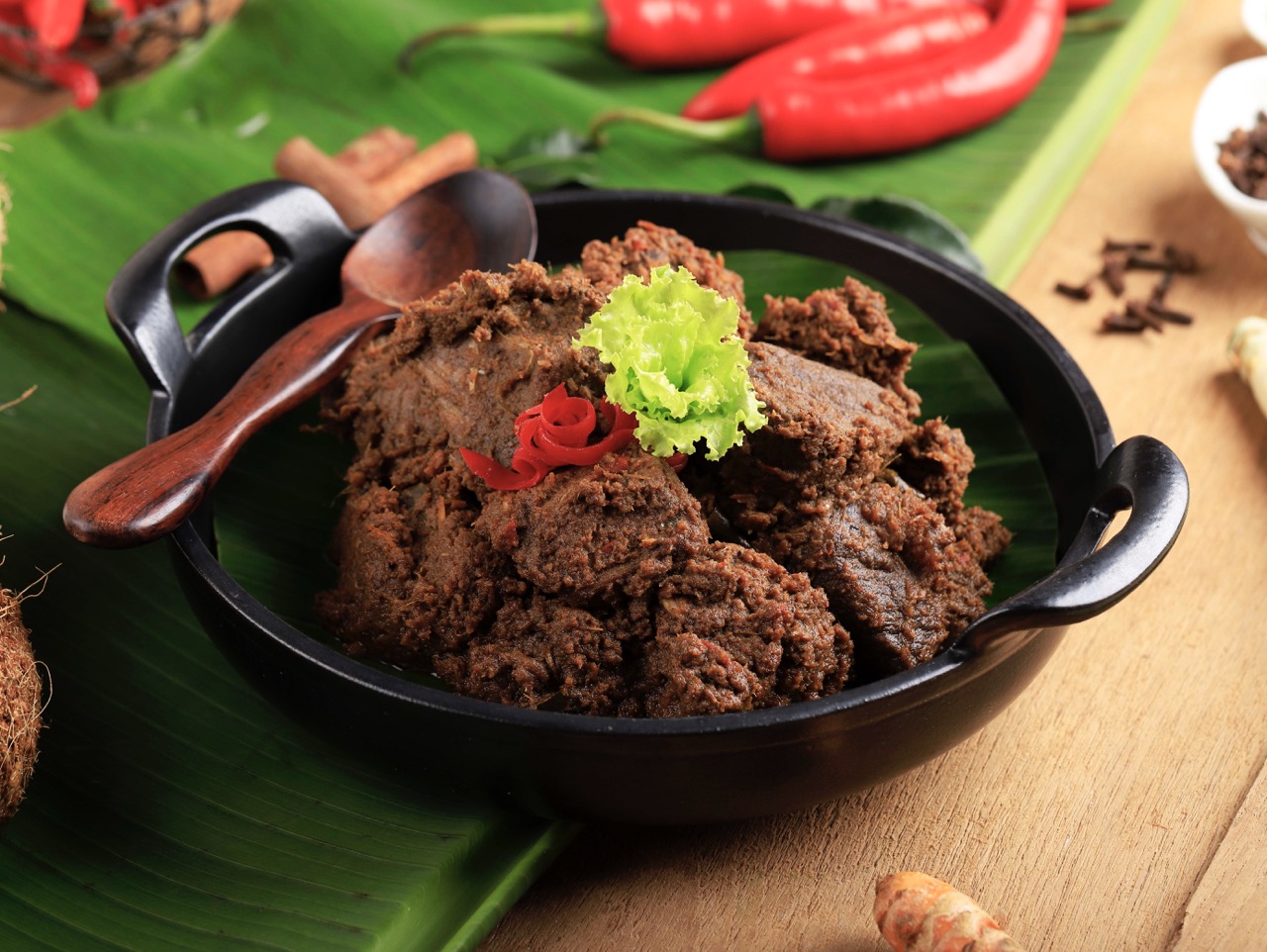
9. Beef Rendang
Beef rendang is a slow‑cooked dry curry from West Sumatra that’s become one of Indonesia’s most famous dishes. The beef is simmered for hours in coconut milk and spices until it’s melt‑in‑your‑mouth tender with a rich, complex flavour.
Can you eat beef in Bali?
Yes. While Bali is predominantly Hindu, Balinese Hinduism differs from Indian Hinduism. Most Balinese people eat beef, though chicken, pork, duck and fish are more common.
Where to try it: Warungs and restaurants across Bali.
10. Gado Gado
Gado gado is a popular Indonesian salad made with steamed vegetables (potatoes, carrots, green beans, bean sprouts, cabbage), tofu, tempeh, boiled egg, and a rich peanut sauce.
It’s hearty, healthy and completely vegetarian.
Where to try it: Warungs and vegetarian‑friendly cafés across Bali.
11. Fried Tempeh
Tempeh is a traditional Indonesian food made from fermented soybeans. It’s high in protein and used as a meat substitute in many dishes.
Our favourite way to eat it? Simply fried and served with sweet soy sauce and sambal. It makes a perfect snack or side dish.
Where to try it: Any local warung.
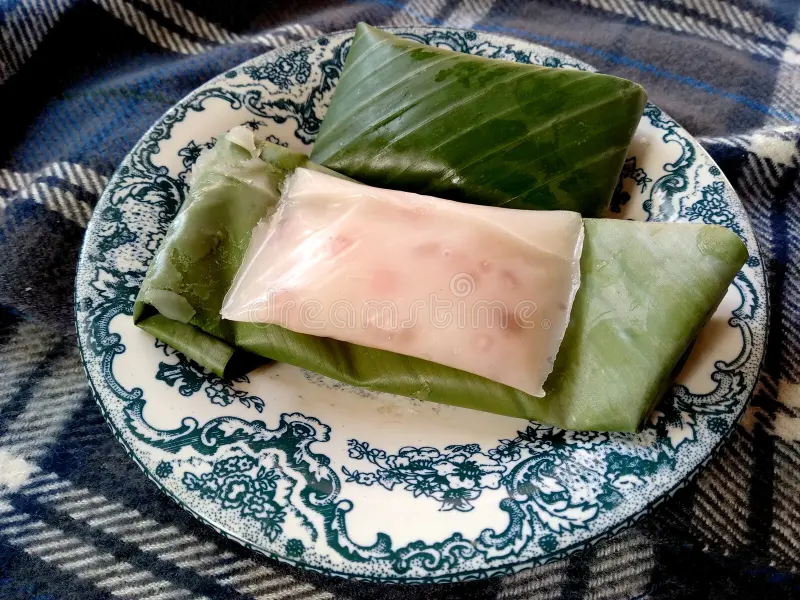
12. Jaje Bali
Jaje Bali are small, colourful glutinous rice cakes rolled in sugar and shredded coconut. They’re traditionally eaten for breakfast or as a snack and are usually sold at early morning markets.
Popular varieties include:
- Pisang Rai (banana cakes)
- Klepon (green palm sugar‑filled cakes)
- Jaje Laklak (pandan pancakes)
Many are infused with pandan leaf, giving them a distinctive green colour.
Where to try it: Ubud Morning Market or traditional markets across Bali.
13. Dadar Gulung
Dadar gulung is a sweet pandan pancake filled with shredded coconut and palm sugar. The pancake is bright green thanks to pandan leaf, and the filling is rich and indulgent.
Unlike jaje, dadar gulung is commonly found on dessert menus at restaurants, making it easier to try.
Where to try it: Restaurants and cafés across Bali.
14. Pisang Goreng
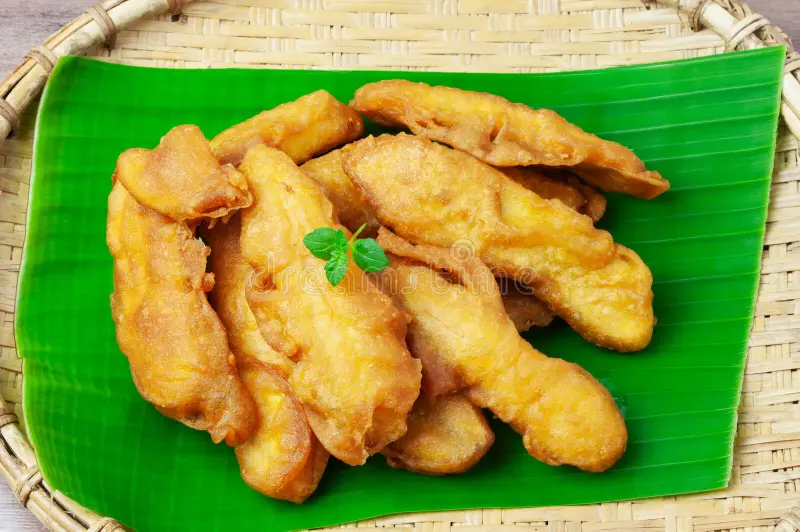
Pisang goreng (fried banana) is a simple, delicious snack made from fresh bananas dipped in batter and deep‑fried.
In Bali, it’s often topped with chocolate and cheese (a surprisingly good combination), or served with syrup, honey or ice cream.
Where to try it: Street vendors, warungs and cafés.
15. Jamu (Bonus: Traditional Wellness Drink)
Jamu is a traditional Indonesian herbal drink made from natural ingredients like turmeric, ginger, tamarind, honey and spices. It’s been used for centuries for its health benefits and medicinal properties.
In recent years, jamu has become popular in Bali’s wellness scene and is now commonly found in health cafés alongside juices and smoothies.
Where to try it: Health cafés, juice bars and traditional markets.
Our content is 100% free. If you find it useful, buy us a Coffee. Cheers!

Adventure Tours
Thrill-seekers - Check our outdoor excursions focusing on the island's natural landscapes, including white water rafting , ATV quad biking through jungles and rice paddies, and sunrise trekking up Mountains.

Day Tours
Curated, full-day (8–12 hour) or half-day sightseeing trips across the island, featuring a private car, driver/guide. Offering personalized experiences visiting iconic temples, waterfalls, rice terraces and local villages.

Multi-Day Tours
Take us up on our curated, 2 to 5 day itineraries offering comprehensive, hassle-free travel across the island, covering major regions like Ubud, Uluwatu, the east coast and everything in-between. These private or small-group packages include transport, entrance fees, and activities.
Where to Eat in Bali By Budget
One of the best parts of eating in Bali is that you can do it well at any price point—from a $‑friendly warung lunch to a white‑tablecloth dinner with views.
Quick heads‑up on “plus plus” (++) pricing: In Bali, some cafés, restaurants and almost all hotel restaurants list menu prices as “++” (often written as “subject to 21%” or similar). This typically means a service charge is added first, then a local restaurant/hospitality tax is applied on top, commonly totalling around 21% (e.g., 10% tax + ~11% service, depending on venue/area). You’ll usually see this noted on the menu or bill—look for “++”, “tax & service”, or “subject to…” so you’re not surprised at checkout. (For a plain‑English explanation of the common “subject to 21%” structure, see an example from a Bali resort FAQ: The Udaya Resorts & Spa. For more detail on how restaurant tax and service charges work, including calculation examples, see: Legal Indonesia.)
Budget: Warungs & Street Food
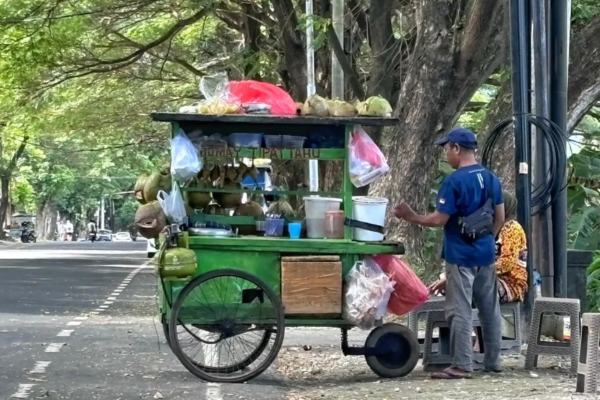
If you want the best value (and often the most memorable meals), start with warungs—small local restaurants serving Balinese and Indonesian classics like nasi campur, nasi goreng, sate lilit, and gado‑gado.
What to expect:
- Simple seating, quick service, big flavour
- Prices are usually all‑in (no “plus plus”), but always check the bill if you’re in a more touristy strip
- Cash often preferred
Smart budget tip: Choose places that are busy with locals (higher turnover usually means fresher food). If you’re easing into Bali, start with cooked dishes before raw salads.
Mid‑Range: Casual Restaurants
This is the sweet spot for many travellers—comfortable seating, strong hygiene standards, and a mix of Balinese staples plus international favourites. You’ll find plenty of mid‑range options in Seminyak, Canggu, Sanur, and Ubud.
What to expect:
- Great for groups, families, and “I want local food but also a solid coffee” days
- Menu prices may look reasonable—then “++” appears at the bottom of the menu
Plus plus in real life: If you’re ordering multiple mains, smoothies, and dessert, that extra tax + service can noticeably lift the total. If you’re trying to stick to a daily budget, prioritise mid‑range spots that clearly state final pricing or where the “++” is modest and transparent.
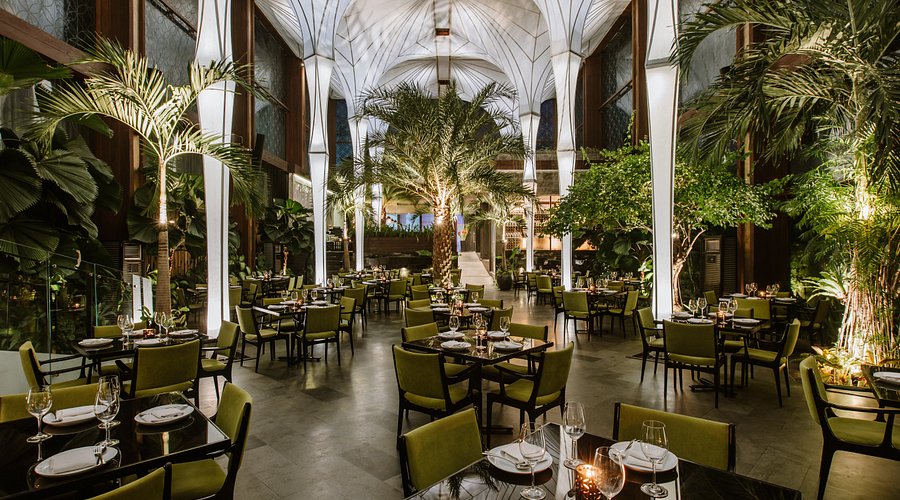
High‑End: Fine Dining
Bali’s high‑end dining scene is genuinely impressive—think chef‑led tasting menus, modern Indonesian cuisine, ocean‑view bars, and resort restaurants where service is part of the experience.
What to expect:
- “++” is extremely common (and sometimes non‑negotiable), especially at hotel venues and high‑profile restaurants
- Reservations may be essential in peak season
- The experience is usually worth it—just know the final bill will likely be higher than the menu price suggests
No‑awkwardness tip: If you’re unsure, ask: “Is this price net or subject to tax and service?” Staff hear this all the time and will tell you upfront.
Bottom line: Warungs are usually the most straightforward for “what you see is what you pay,” while mid‑range and high‑end venues are where Bali plus plus most often shows up—so check for “++” before you order, especially if you’re watching costs.
Bali Food Tours Worth Booking
Want to dive deeper into Balinese cuisine? A food tour is one of the best ways to discover hidden gems, try dishes you’d never find on your own, and learn about the culture behind the food.
Recommended tours:
- Denpasar street food tour
- Ubud market and cooking class
- Sanur evening food walk
👉 Book a Bali Food Tour to explore like a local.
Bali Food Safety Tips
Avoid Bali belly:
- Drink bottled or filtered water only
- Avoid ice in budget warungs
- Choose busy warungs with high turnover
- Wash your hands regularly
- Start with cooked food before trying raw salads
Allergy awareness:
Many Balinese dishes contain peanuts, cashews or shrimp paste. Always ask if you have allergies.
Common Questions - Bali Food and Drink
Is Balinese food spicy?
It can be, but spice levels vary. Sambal (chilli sauce) is usually served on the side, so you can control the heat.
Is Bali good for vegetarians?
Yes. Tofu, tempeh and vegetable dishes are widely available.
Can I drink tap water in Bali?
NO. Stick to bottled or filtered water.
What's the best area for food in Bali?
Ubud for traditional Balinese food, Seminyak for variety, Jimbaran for seafood, Denpasar for authentic street food.
How much does food cost in Bali?
Warung meals start from budget prices. Mid‑range restaurants cost more, and fine dining can reach premium pricing.
Do I need to tip in Bali?
Tipping isn't required but is appreciated for good service.
The Bottom Line:
Balinese food is diverse, delicious and incredibly affordable. From smoky satay and fragrant curries to sweet rice cakes and wellness drinks, there’s something for every traveller — whether you’re eating at a street cart or a five‑star restaurant.
The best way to experience Bali’s food culture? Eat local, try new things, and don’t be afraid to ask questions.
Ready to Plan your Sanur Escape?
- Book Accommodation: Booking.com | Agoda
- Book Activities & Tours: GetYourGuide | Klook
- Travel Insurance: World Nomads | SafetyWing
- Airport Transfer: Klook Private Transfer
- Fast Boat to Nusa Islands: GetYourGuide
- Phone eSIM – Saily:
Next Steps:
- Explore our Bali on a Budget Guide for money-saving tips
- Read our Retiring in Bali Guide for long-term stay information
- Check out our Nusa Penida Day Trip Guide for island-hopping adventures
- Download our Bali Packing List for travelers
Affiliate Disclosure: Bali or Bust is reader-supported. When you book through our links, we may earn a small commission at no extra cost to you. This helps us keep the site running and perhaps fund a sunset cocktail or two. We only recommend services and products we genuinely use and trust.
Other Essential Articles

Best eSIM for Bali
Landing in Bali is all vibes… until you realise you’ve got no data, the airport Wi‑Fi is crawling, your ride-share app won’t load, and you’re trying to find your driver while 200 people are waving SIM card flyers at you.

Bali Belly
Formerly the Fairmont, this prestigious IHG property features spacious suites and private pool villas (one to three bedrooms) set in a prime central location. Amenities include multiple pools, a luxury spa, fitness center, and beachfront dining. From $362 AUD per night.

Bali Visa
Hyatt's most elite property in Sanur, this five-star resort blends traditional Balinese village design with modern luxury. Choose from suites or private pool villas grouped around lush courtyards. Facilities include three swimming pools, the renowned Shankha Spa, and multiple dining venues. From $384 AUD per night.

Monkeys, Bats & Dogs
A boutique beachfront treasure with a unique history. Founded in the 1960s, this intimate resort features standalone bungalows built by local craftsmen, set within lush tropical gardens. The founder's philosophy - "My hotel is my living room, my guests are my friends" - perfectly captures the warm, personal atmosphere. From $409 AUD per night.

Bali Travel Insurance
Bali’s first-ever five-star resort (recently renovated), the Hyatt Regency offers expansive tropical gardens, three outdoor pools, and exceptional family-friendly facilities including a dedicated kids’ pool and club. The beachfront location and attentive service make this a perennial favorite. From $206 AUD per night.

Packing for Bali
Opened in February 2024 after the transformation of the historic Grand Inna Bali Beach, the resort is situated within the 42-hectare Sanur Special Economic Zone (KEK) for Health and Wellness. It is known for its focus on well-being, sophisticated Balinese architecture, and its prime 1km stretch of white sandy beach.
Booking Tip: We recommend using Booking.com or Agoda for the widest selection and best rates. For luxury properties, booking directly through the hotel website can sometimes yield exclusive perks or upgrades.